
Main menu

Initial clinical data shows deep and durable antiviral activity, including direct silencing of cccDNA, offering a possible pathway to a finite cure for HBV patients

May 30, 2026 08:00 AM EDT

DURHAM, NC, and SEATTLE, WA (BUSINESS WIRE)  – Tune Therapeutics, a leading epigenome editing company, presented new data today at the European Association for the Study of Liver (EASL) Congress in Barcelona, Spain, demonstrating the first clinical evidence of epigenetic silencing in hepatitis B virus (HBV). 

The oral presentation was delivered by Dr. Ed Gane, Professor of Medicine at the University of Auckland and world-renowned authority on HBV. The phase 1b/2a clinical trial evaluated the safety and tolerability of TUNE-401 in patients with Chronic Hepatitis B (CHB).

CHB affects more than 240 million people globally, and current therapies rarely achieve a functional cure (≈1 per annum). The key barrier to cure remains the persistence of intranuclear covalently closed circular DNA (cccDNA) within liver cells that serves as the stable viral reservoir. Both current and investigational therapies have indirect mechanisms of action that do not directly silence cccDNA; therefore, when these regimens are discontinued, the virus almost universally comes back.

“The development of a finite HBV cure has long been stalled by a central challenge: how to safely and specifically target and permanently silence cccDNA,” said Dr. Gane. “The TUNE-401 study provides the first clinical evidence that direct epigenetic silencing of HBV cccDNA can achieve this goal, with the potential to meaningfully improve long-term health outcomes for all patients living with chronic hepatitis B.”

Using Tune’s proprietary ‘genetic tuning’ platform, TEMPO, TUNE-401 is an intravenously delivered LNP-RNA epigenetic silencing therapy that is translated in the liver into an HBV-targeting protein, which potently and selectively methylates both cccDNA and integrated HBV DNA.

The ongoing study includes a single-ascending-dose cohort, which consisted of four dose-escalation levels of TUNE-401 IV infusion (SAD1=0.2 mg/kg, SAD2=0.45 mg/kg, SAD3=0.65 mg/kg, SAD4=0.85 mg/kg). The multiple-dose cohort consisted of up to three IV infusions (MD3 = 0.65 mg/kg), administered at least four weeks apart. 

When evaluating the safety and tolerability of TUNE-401 in patients with chronic hepatitis B, researchers across the three study sites in New Zealand, Hong Kong, and Moldova observed:

Anti-viral activity

  • Durable and dose-dependent repression of all HBV biomarkers including Hepatitis B surface antigen (HBsAg), pregenomic RNA (pgRNA), Hepatitis B e-antigen (HBeAg), Hepatitis B core-related antigen (HBcrAg) and phosphorylated Hepatitis B core HBcAg (P-HBcAg), demonstrating and indicative of direct cccDNA silencing.
  • HBV-associated biomarker repression was observed in 100% of participants treated at dose levels 2-4.

Biomarker Silencing and Loss 

  • Direct cccDNA biomarker loss of pgRNA was observed in 4 out of 7 HBeAg(-) participants treated at dose levels 3 or 4. Of this subset with pgRNA loss, the three participants with detectable HBcrAg at baseline lost HBcrAg as well, with all participants additionally negative for P-HBcAg. 
  • Direct cccDNA biomarker loss of HBeAg was observed in 3 out of 5 HBeAg(+) participants treated at dose levels 3 or 4.

Durability

  • Durable repression of multiple HBV-associated biomarkers following a single dose has currently been observed out to 17 months. 

Safety

  • A favorable safety profile has been observed to date. Mild to moderate infusion-related reactions and transient asymptomatic transaminase elevations that return to normal within days have been observed in both single and multiple-dose cohorts.
  • No additive toxicity from multiple doses has been observed to date. 

“Over the prior 30 years in hepatology, I have rarely seen a clinical signal this clear,” said John McHutchison, AO, MD, CEO of Tune Therapeutics. “The deep, dose-dependent, durable reductions across multiple HBV biomarkers, together with the ability to silence the cccDNA reservoir directly, mark a fundamental step toward a possible cure for chronic hepatitis B. We are advancing TUNE-401 into a larger Phase 2 trial with the goal of delivering the first epigenetic backbone therapy for patients with HBV infection.”

Tune Therapeutics is now advancing TUNE-401 into a larger Phase 2 study, including continued dose optimization and expanded multi-dose cohorts. Phase 2 initiation is expected as early as late 2026. 

Click below to view the full EASL2026 presentation:


About Ed Gane, MD, MBChB

Dr. Ed Gane is Professor of Medicine at the University of Auckland, New Zealand, and Chief Hepatologist, Transplant Physician, and Deputy Director of the New Zealand Liver Transplant Unit at Auckland City Hospital.

About TUNE-401

TUNE-401 is a first-in-class investigational product candidate for the treatment of HBV infection. TUNE-401 utilizes Tune’s TEMPO platform to epigenetically silence the virus’s transcriptional reservoir, cccDNA, the “viral factories” necessary for sustained CHB infection. The lipid nanoparticle for TUNE-401 is licensed from Acuitas Therapeutics Inc.

About Tune Therapeutics

Armed with its powerful and innovative genetic tuning platform (TEMPO), Tune Therapeutics aims to bring gene, cell, and regenerative therapies into a new era of human medicine – expanding their range of application from rare disease to common, chronic, and age-related conditions.

Forward-Looking Statements

This press release contains forward-looking statements regarding Tune Therapeutics’ clinical development plans, including statements about the potential safety, efficacy, and therapeutic benefit of TUNE-401, the design, timing, and progression of clinical trials, the advancement of TUNE-401 into Phase 2, and the broader application of the TEMPO platform. These statements are based on current expectations and assumptions that are subject to risks and uncertainties, including risks related to early-stage clinical results, the inherent uncertainty of clinical trials, regulatory review, and the company’s ability to fund and execute its development programs. Actual results may differ materially. Tune Therapeutics undertakes no obligation to update any forward-looking statement except as required by law.

Media Contact

Emily Steinhauer
Esteinhauer@cglife.com 
(203) 218-9906

Renowned hepatologist and drug developer set to guide company’s next phase of growth  

March 04, 2025 08:00 AM EST

DURHAM, N.C. & SEATTLE — (BUSINESS WIRE) – Leading epigenome company Tune Therapeutics is proud to announce that veteran drug-development executive John McHutchison AO, MD will be its new CEO and Chairman of the Board. 

“I am honored to be taking on this new role with Tune, and to be leading such an exciting and talented team,” said Dr. McHutchison. “The company has such a strong foundation, and the modality has the potential to address a vast range common and complex diseases that have thus far remained untreatable via conventional genetic approaches. I’m eager to help write this next chapter in medicine.”

Dr. McHutchison previously served as the President and CEO of Assembly Biosciences, where he spearheaded the company’s progress in advancing novel HBV antivirals using core-inhibitor technology. He later moved to the Board of Directors, taking on the role of Chair for the Science and Technology Committee.

Prior to joining Assembly, Dr. McHutchison was the Chief Scientific Officer and Head of Research and Development at Gilead Sciences. Under his leadership, the company developed multiple treatments for chronic Hepatitis B and a curative treatment regimen for Hepatitis C – bringing relief to millions living with the condition worldwide. He also brings extensive cell therapy expertise having played a key role in the company’s strategic acquisition of Kite Therapeutics, helping to establish its leadership in the CAR T cell therapy space.

“With clinical trials underway with Hepatitis B patients in New Zealand and Hong Kong, Tune Therapeutics is at an exciting, pivotal stage,” said Ali Behbahani, MD, Partner and Co-Head of Healthcare at New Enterprise Associates. “In this context, John McHutchison brings an unparalleled blend of knowledge and practical industry expertise. There could be no better person to advance Tune’s vision and drive our future success.”

“John has been an invaluable asset to the Tune Board of Directors, and we are thrilled to have him leading the company forward as CEO,” added Dan McHugh, Tune Co-Founder, Board Member, and Investor at Yosemite. “His medical background and expansive work in commercializing gene and cell therapies leaves Tune ideally positioned to translate its considerable technical advances to the clinic. We see bright, new horizons ahead.”

About Tune Therapeutics

Armed with its powerful and innovative genetic tuning platform (TEMPO), Tune Therapeutics aims to bring gene, cell, and regenerative therapies into a new era of human medicine – expanding their range of application from rare disease to common, chronic, and age-related conditions.

Media Contact

Glenn Murphy, Director of Communications: glenn.murphy@tunetx.com

Strong investor syndicate backs clinical-stage Hepatitis B program while advancing pioneering gene-tuning platform


DURHAM, N.C. & SEATTLE–(BUSINESS WIRE)–Leading epigenome editing company Tune Therapeutics (Tune) today announced the completion of over $175M in financing led by New Enterprise Associates, Yosemite, Regeneron Ventures and Hevolution Foundation.

“It is deeply gratifying to have seen this platform and company evolve so far,” said Tune Co-Founder Dr. Charles Gersbach, whose research at Duke University formed the basis for Tune’s TEMPO epi-editing platform. “Tune has already achieved a global landmark in the field, in the clinical application of epi-editing to a common and chronic disease. Thanks to the support of our investors, we anticipate the development of many more new epi-editing therapies in the years to come.”

The funding will accelerate the development of the company’s existing pipeline, currently anchored by Tune-401 – its clinical-stage epigenetic silencing drug for chronic Hepatitis B (HBV). It will also support the development of additional gene, cell, and regenerative therapy programs already underway at Tune, and to progress its broader mission of bringing the power and versatility of epigenetic therapies to bear on common and chronic diseases.

“We are incredibly proud to see Tune progress successfully into the clinic,” said Reed Jobs, Founder and Investor at Yosemite. “The Yosemite team has been an enthusiastic backer of Tune from the beginning, as we feel that few technologies have the biological power of epigenetic medicine to transform disease outcomes for the better. The range of potential applications and indications is vast and will only continue to expand.”

“To date, modern medicine and pharmacology has done much to extend our lifespans, but far less for our active healthspans,” explains William Greene, Chief Investment Officer at Hevolution Foundation. “Chronic diseases of ageing are accelerating in incidence, prevalence, and severity, and current approaches are simply inadequate. It is our belief that epigenetic editing may prove to be the transformative modality we need to enable a new era of regenerative medicine.”

Since its founding in 2021, Tune has made impressive strides in the development and application of its novel and potentially transformative epigenome editing platform. At the 2023 ASGCT conference, Tune announced a global first in the field: the durable repression of a therapeutically relevant gene (PCSK9) in non-human primates using genetic tuning. This gene repression was accompanied by an enduring reduction of LDL cholesterol levels that is still ongoing almost 2 years after a single, transient delivery of the epi-silencing construct. Later that year, the company unveiled Tune-401, a first-in-class epigenetic silencer for chronic Hepatitis B, a condition that impacts over 250 million people, and is the leading cause of liver cancer worldwide.

In November of 2024, Tune announced it was moving to the clinical stage, having received approval to begin clinical trials in New Zealand, and subsequently in Hong Kong – supported by world-renowned hepatologists and Principal Investigators Dr. Ed Gane and Dr. Man-Fung Yuen, respectively. With its lead program now in the clinic, Tune is leveraging this momentum to enhance its platform capabilities and develop its other gene and cell therapy programs.

“With this renewed support, we are well-positioned to advance our HBV clinical program, to invest in our platform, and to expand our pipeline,” said Akira Matsuno, Co-Founder, President and CFO of Tune Therapeutics. “We are grateful to all our investors for their deep confidence in our team and approach, backed by compelling data that continues to underscore the transformational potential of epi-editing as a therapeutic modality.”

About Tune Therapeutics

Armed with its powerful and innovative genetic tuning platform (TEMPO), Tune Therapeutics aims to bring gene, cell, and regenerative therapies into a new era of human medicine – expanding their range of application to common and chronic diseases.

About Tune-401

Tune-401 is a first-in-class investigational product candidate for treating Hepatitis B (HBV) infection. Tune-401 utilizes the company’s versatile, modular TEMPO platform to epigenetically silence viral HBV intDNA and cccDNA necessary for sustained HBV infection. Lipid nanoparticle technology for Tune-401 has been provided by Acuitas Therapeutics Inc.

The company’s leading therapeutic candidate, Tune-401, has now been approved for clinical trials in both Hong Kong and New Zealand

January 07, 2025 08:00 AM Eastern Standard Time

DURHAM, N.C. & SEATTLE–(BUSINESS WIRE)–Leading epigenetic therapy company Tune Therapeutics announced today that it will begin a clinical trial in Hong Kong after receiving a Certificate for Clinical Trial from the Hong Kong Department of Health. This marks the second global approval to commence a Phase 1b clinical trial for Tune-401, an investigational epigenetic silencing therapy designed to treat chronic hepatitis B (CHB).

“We’re taking a fresh angle on the battle against chronic hepatitis B,” said Derek Jantz, Chief Scientific Officer at Tune Therapeutics. “Current standard-of-care treatments are rarely curative due to the virus mechanism of infection. But by employing epigenetic silencing to target both integrated viral DNA and cccDNA, we are replicating the natural processes observed in spontaneous functional cure and aiming to make that outcome the norm in HBV treatment.”

The Hong Kong trial will be led by Professor Man-Fung Yuen – world-renowned hepatologist and Chair Professor of The University of Hong Kong and the Chief of the Division of Gastroenterology and Hepatology at Queen Mary Hospital, Hong Kong. With a career spanning 30 years and over 600 published papers, Dr Yuen’s pioneering research has significantly advanced our understanding of chronic hepatitis B and liver cancer treatment in Asia and worldwide.

“Over 257 million people are still living with chronic hepatitis B, and worldwide the disease disproportionately impacts Asian and Pacific Islander populations,” explains Dr. Yuen. “While early screening and detection is still paramount, this novel epigenetic silencing approach offers new hope for clinicians, and could make a major impact in these patient groups in particular.”

According to the World Health Organization, the burden of Hepatitis infection is highest in the Western Pacific Region – including China, Japan, Cambodia, New Zealand, and Australia. With a parallel clinical trial occurring in Auckland, New Zealand, Tune is focusing on countries that would see the most immediate impact and benefit from a new HBV treatment paradigm.

Tune shared encouraging preclinical data in November 2024 demonstrating Tune-401’s ability to repress both cccDNA and integrated DNA in target cells and animal models.

Preclinical data shows strong, durable, and precise repression of HBV DNA across
in vitro and in vivo models, offering a possible pathway to a functional cure

DURHAM, NC and SEATTLE, WA (November 19, 2024) – Leading epigenome editing company Tune Therapeutics showcased new data yesterday at the American Association for the Study of Liver Diseases (AASLD) conference, in support of its drive to develop a lasting, functional cure for chronic Hepatitis B Virus (HBV).

Tune unveiled its lead HBV program at the 2023 AASLD event with preclinical data showing strong and durable effect in targeted human hepatocytes. This year, Tune Therapeutics Principal Scientist Brian Cosgrove shared new in vitro and in vivo data, showcasing Tune’s clinically optimized liver-targeting LNP-RNA epi-silencing drug (Tune-401) – which enabled the near-complete repression of HBV RNA in human cells, and in a ‘true infection’ FRG mouse model.

The challenge behind targeting chronic HBV infection, explained Cosgrove, is two-fold: HBV DNA integrates into the host genome, but it also exists as copies of extrachromosomal cccDNA (covalently closed circular DNA) in hepatocyte nuclei.
This makes functional cure very rare with current standard-of-care treatments (less than 1-3% of patients achieve this), as no existing or pipeline therapy can effectively inactivate both integrated DNA (intDNA) and cccDNA.

“Our groundbreaking approach addresses the dual challenges of HBV by targeting both integrated viral DNA and the source of viral latency – cccDNA – which current therapies do not target,” said Cosgrove. “The data we’ve gathered strengthens the case for epi-editing as a uniquely powerful treatment modality for HBV – and gives us confidence as we move into human clinical trials.”

Tune-401 is a novel epigenetic silencing therapeutic that is designed to target both types of HBV DNA, in an effort to shut down viral transcription and suppress the production of new viral particles. As Cosgrove explained, the approach has achieved highly promising results in preclinical studies, including:

● Up to 99.99% repression of 3.5 kb HBV RNA from cccDNA of infected primary human hepatocytes (PHHs)
● Corresponding reduction in PHHs of extracellular Hepatitis B surface antigen (HBsAg) – the primary indicator of Hepatitis B infection
● In Hep3B cell lines, strong repression of total HBV RNA and extracellular HBsAg from intDNA.
● Definitive inverse correlation between HBV DNA methylation and HBV RNA production – presenting a clearly defined mechanism of action for Tune-401
● Durability of virus silencing beyond 550 days following transient delivery to a cell line harboring HBV – which represents the persistence of repressive epigenetic marks through over 275 rounds of cell division

“Tune-401 offers a unique opportunity to show the impact of epi-editing,” said Blythe Sather, Vice President, Head of Research. “Chronic Hepatitis B affects more than 250 million people worldwide – each one facing the daily reality of living with this devastating disease. I truly believe that our innovative epi-silencing approach, which targets all HBV viral reservoirs, could be the scientific advance we so sorely need – a new strategy that could meaningfully change the treatment paradigm for this disease.”

TUNE-401 will be the first epigenetic therapy to enter clinical trials for an infectious disease


DURHAM, NC and SEATTLE, WA (November 14, 2024) – Leading epigenome editing company Tune Therapeutics announced today that it has received clinical trial application (CTA) approval from the New Zealand Medicines and Medical Devices Safety Authority (Medsafe) to initiate a Phase 1b clinical trial for TUNE-401 – an investigational epigenetic silencing therapy designed to treat chronic Hepatitis B (HBV). 

With this approval, TUNE-401 is expected to be the first epigenetic therapy to enter the clinic for the treatment of a common and infectious disease. Over 250 million people are currently living with chronic HBV infection, which is also the leading cause of hepatocellular carcinoma, or liver cancer – accounting for around 56% of cases worldwide.

The first-in-human study will evaluate the safety, tolerability, pharmacokinetics (PK), and pharmacodynamics (PD) of TUNE-401 in adult participants with chronic HBV. The initial clinical trial site will be in Auckland, New Zealand, and led by Principal Investigator Dr. Ed Gane.

“Tune-401 is designed to mimic and amplify a natural, innate immune response against HBV” said Derek Jantz, Chief Scientific Officer at Tune Therapeutics. “Despite the well-established role of epigenetics in virus control, Tune-401 is the first treatment to employ direct epigenetic silencing to inactivate a virus. We feel confident that this unique mechanism of action will deliver long-awaited benefits for HBV patients and create renewed interest and momentum in the broader field of genetic medicine.”

Tune-401 employs lipid nanoparticles (LNPs) to deliver RNA encoding the active, HBV-targeting construct directly to liver cells. Inside these cells, the construct is translated into an epi-silencing protein that targets both integrated HBV DNA and cccDNA episomes – free-floating loops of HBV DNA that generate new viral particles and sustain chronic infection for years on end. Clinicians assert that shutting down these cccDNA ‘viral factories’ is an essential prerequisite to achieving a functional cure for HBV. 

Critically, Tune-401 is the first treatment to reach the clinic that aims to silence both integrated HBV and HBV cccDNA at the epigenetic level, without cutting or editing DNA. Its active, epi-silencing protein binds to DNA without cutting, adding methyl groups that repress or inactivate viral genes while leaving the human genome intact. The protein is also highly specific – targeting a DNA target sequence unique to HBV, and highly conserved among HBV genomes.

“Hepatitis B remains a significant global health threat, with millions of people affected and in need of durable treatment solutions,” said Dr. Ed Gane, Professor of Medicine at the University of Auckland. “Epigenetic silencing has the potential to achieve a long sought-after goal in the community: the promise of sustained disease remission after a finite course of treatment.”Tune Therapeutics will present data supporting its entry into clinical trials at the upcoming American Association for the Study of Liver Diseases (AASLD) Liver Meeting on Monday, November 18th.

 Data shows deep repression of HBV both in primary cells and ‘gold standard’
 humanized mouse model 

Therapeutic targets a single “master controller” sequence to silence all forms of the virus

Approach offers a path to functional cure for HBV 

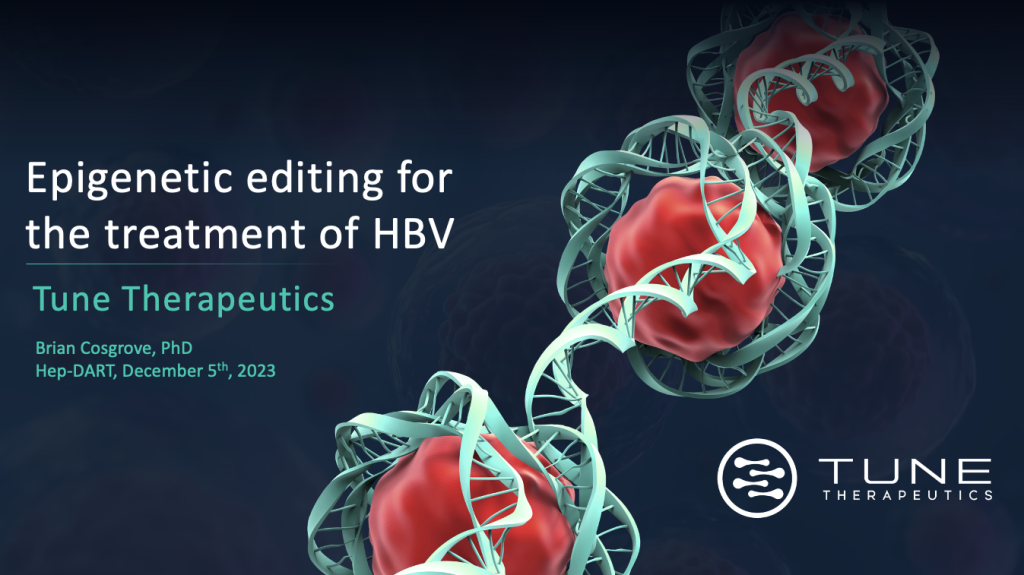
DURHAM, NC and SEATTLE, WA (December 5, 2023) – Leading epigenome editing company Tune Therapeutics presented data in support of its chronic Hepatitis B Virus (HBV) program, demonstrating the ability to durably silence essential mechanisms of viral replication and persistence across a range of model systems. 

TUNE-401 represents a fundamentally new approach to HBV treatment, in that it utilizes Tune’s precision genetic tuning platform, TEMPO, to inactivate viral DNA integrated into host chromosomes, while simultaneously silencing the extra-chromosomal, cccDNA “viral factories” necessary for sustained HBV infection. Importantly, the TEMPO platform does this via epigenetic processes, and without cutting, damaging, or altering genomic DNA sequences in any way.

The ability to suppress the virus in both contexts – both within and outside the host genome – is an established prerequisite for control of the virus in chronic HBV patients, and this new epigenetic silencing approach offers a pathway toward a functional cure for HBV as a standalone therapy. 

The Tune HBV data, shared for the first time at the 2023 HepDART hepatology conference, showed:

  • near-complete repression of viral DNA in primary human hepatocytes and cell lines in vitro, with ongoing durability now beyond 550 days, and more than 275 cell doublings
  • similarly high levels of repression in successfully epi-edited cells in vivo, using chimeric, true-infection mouse models 
  • highly specific targeting and methylation by TUNE-401 for both integrated virus and cccDNA – with little or no expression change in non-targeted genes


Moreover, these results were achieved via a single target sequence, common to all viral contexts and locations within the cell, and highly conserved across HBV genotypes. 

“We used TEMPO to screen for epigenetic repression targets that are active in cccDNA, and also in integrated HBV DNA,” explained Principal Scientist Brian Cosgrove, who presented the data at HepDART. “Through the richness of these data sets, we found multiple repression candidates that worked well in both contexts. The most compelling targets went on to yield near-complete repression of viral DNA in primary human hepatocytes, when corrected for per-cell delivery efficiency limits.” 

In validating this target in vivo, Tune took care to select a comprehensive and informative HBV infection model featuring humanized FRG mice. 

“We know from clinical research,” said Cosgrove, “that less than 5 percent of chronic HBV patients achieve full viral clearance and cure. Many who do, however, show epigenetic inactivation of the cccDNA. And while a variety of in vivo models exist for HBV infection, very few allow for the effective study of HBV regulation in its natural, extrachromosomal (cccDNA) context. The chimeric FRG mouse model does just that.”

Chimeric FRG mice are created via the ablation and replacement of mouse liver cells with transplanted, human hepatocytes – effectively “humanizing” the liver. As such, they represent the gold standard for assessing the dose and efficacy for liver-directed therapeutics ahead of human clinical trials.  When tested in this model system, TUNE-401 showed high repression in delivered cells.

Though no large animal model is available for HBV, Tune has demonstrated durable, liver-directed epi-editing of non-human primates (NHPs) using a surrogate target (PCSK9) and the same, essential mode of action – targeted DNA methylation. 

“Based on the breadth of our preclinical data, we have every reason to believe that this novel therapeutic strategy will translate,” says Derek Jantz, Chief Scientific Officer at Tune Therapeutics. “We sincerely hope that this will revitalize the field and lead to the standalone functional cure that HBV patients have been waiting for.”

Tune expects its HBV program to enter the clinic by the end of 2024, under the guidance of leading international clinical investigator Dr. Edward Gane.

Click below to view the full presentation:


About Tune Therapeutics

Armed with its powerful and innovative genetic tuning platform (TEMPO), Tune Therapeutics aims to bring gene, cell, and regenerative therapies into a new era of human medicine – expanding their range of application to common, chronic and age-related diseases that are straining healthcare systems and limiting human healthspan on a global scale.

Tune is currently hiring for additional members to join the team. For more information, please visit https://tunetx.com/join-the-band/.

About TUNE-401
TUNE-401 is a first-in-class investigational product candidate for the treatment of Hepatitis B (HBV) infection. TUNE-401 utilizes Tune’s TEMPO platform to epigenetically silence viral HBV DNA in host chromosomes, while simultaneously silencing the extra-chromosomal, cccDNA “viral factories” necessary for sustained HBV infection. Lipid nanoparticle technology for TUNE-401 has been provided by Acuitas Therapeutics Inc.

Media Contact

Glenn Murphy, Director of Communications

glenn.murphy@tunetx.com

(919) 274-6922

– Noted clinical investigator Dr. Ed Gane outlines program concept during 2023 AASLD presentation in Boston

– Mechanism targets both integrated virus and cccDNA; expected to begin clinical testing by end of 2024

– Preclinical program data to be presented at the 2023 Hep DART Conference


DURHAM, N.C. & SEATTLE – Pioneering epigenome editing company Tune Therapeutics has announced it is working on a new and potentially curative approach to treating chronic HBV infection.

The Tune HBV program was unveiled by Dr. Ed Gane, Professor of Medicine at the University of Auckland and world-renowned authority on Hepatitis B Virus (HBV) at the American Association for the Study of Liver Diseases (AASLD) conference in Boston, MA on November 11th. The program, described by Gane at a session on emerging HBV treatments, aims to utilize TEMPO –Tune’s proprietary ‘genetic tuning’ platform – to achieve functional cure through the permanent, epigenetic repression of viral activity.

HBV affects upwards of 296 million people worldwide, and though an effective vaccine exists, its acceptance and uptake are far from complete. Nearly 90% of unvaccinated infants infected with HBV will develop a lifelong, chronic condition, and for the vast majority of these patients, existing standard of care (SOC) treatments have proven insufficient to clear infection. This is primarily due to the stable, latent nature of the virus, which can persist in two forms – integrated into the host’s genome, and in extra-chromosomal cccDNA depots – for decades at a time.

To date, most attempts at HBV treatment have focused on disrupting viral replication or restoring host immune response against the virus. But because they leave the cccDNA depots – the effective source of new viral particles – intact, they merely suppress the virus, rather than shut it down. Here, explained Dr. Gane, is where Tune Therapeutics is looking to change the equation.

“Tune has a powerful and fundamentally new approach, unlike anything else I have ever seen in clinical development,” said Gane. “It directly targets both the integrated HBV and cccDNA, which we in the field have long identified as a prerequisite for a functional cure, and it does so using epigenetic systems that we know to be involved in viral silencing.”

In rare cases, chronic HBV patients are able to maintain control of the virus without drug intervention via spontaneous transcriptional silencing of the virus DNA. As Tune Therapeutics’ Chief Scientific Officer Derek Jantz elucidates, this fact was the crucial driver for a new therapeutic approach using TEMPO.

“We can leverage the same, exact mechanism of virus control that we observe in these functionally-cured patients by switching off the virus using a targeted epigenetic silencer. This is an exciting time for the field, and we’re hopeful this first-in-class therapy will be transformative for chronic HBV sufferers worldwide.”

Tune Therapeutics will be presenting preclinical data on its HBV program at the upcoming Hep DART conference in December 2023, and is aiming to dose its first patient in 2024, with Dr. Gane serving as Lead Investigator.

About Ed Gane, MD, MBChB

Dr. Ed Gane is Professor of Medicine at the University of Auckland, New Zealand, and Chief Hepatologist, Transplant Physician, and Deputy Director of the New Zealand Liver Transplant Unit at Auckland City Hospital.

About Tune Therapeutics

Armed with its powerful and innovative genetic tuning platform (TEMPO), Tune Therapeutics aims to bring gene, cell, and regenerative therapies into a new era of human medicine – expanding their range of application to common, chronic and age-related diseases that are straining healthcare systems and limiting human healthspan on a global scale.

Method targets the epigenome, makes no changes to the underlying DNA sequence
 First example of lasting repression after transient epi-editor delivery in a non-human primate 


DURHAM, N.C. and SEATTLE, WA -(BUSINESS WIRE)- May 22, 2023 – Last week, at the 26th Annual Meeting of the American Society of Gene & Cell Therapy (ASGCT), leading epigenetic editing company Tune Therapeutics showcased the power and potential of its TEMPO TM genetic tuning platform, by presenting data showing the stable repression of the PCSK9 gene and the effective reduction of LDL-cholesterol levels in non-human primates (NHPs). This data marks a significant waypoint on the path to epigenetic medicine, in that it represents the first demonstration of durable epigenetic gene regulation, in a large animal model, following transient delivery of an epi-editor.

A common therapeutic target for the prevention of cardiovascular disease, it is well established that repressing the PCSK9 gene reduces elevated LDL-cholesterol levels, in turn associated with the formation of artery-clogging plaques. The non-human primate data presented at the ASGCT conference showed that epigenome editing (or genetic tuning) can drive the stable repression of PCSK9 (ongoing past four months) following a single treatment, and without cutting or nicking the DNA, or altering its coding sequence in any way.

Tune’s TEMPO platform is based on decades of foundational research by company Co-Founders Charles Gersbach and Fyodor Urnov. The versatile, modular platform incorporates a DNA-binding Domain (DBD) that binds to DNA without cutting it, tethered to one or more effector proteins, which produce the required epigenetic effect. Depending on the effector selected, this can mean repressing genes that actively drive disease, or activating genes for which deficiency is the problem. Moreover, the TEMPO platform itself can be used to screen for unique gene regulation targets – providing an integrated, high-throughput process that accelerates the initial phases of drug discovery and development.

In the live data presentation, entitled “Transient Delivery of Epigenome Editors Stably Represses PCSK9 and Lowers LDL Cholesterol in Non-Human Primates, Senior Scientist Jennifer Kwon described how Tune developed a TEMPO epi-repressor targeting the PCSK9 gene, encoded it into RNA, and delivered it to cells and large animal subjects via lipid nanoparticle (LNP). Initial experiments in rapidly dividing liver cells showed gene repression levels of up to 98% with effects maintained for over 6 months, suggesting a stable, heritable, and highly durable mechanism.:

When a single dose of the same epi-repressor was delivered intravenously to three NHPs, researchers recorded:

  • ~75% drop in serum PCSK9 past 120 days of observation
  • ~56% reduction in LDL-cholesterol levels
  • Methylation patterns around the PCSK9 target site that were practically unchanged between day 7 and day 85 of the study

Taken together, these results show a potent and persistent genetic tuning effect, well tolerated by the animals, and validate epigenetic DNA methylation as the core mode of action. The study is ongoing, and the durability of gene repression will continue to be monitored.  

“In our journey to develop genetic tuning into a precise and robust therapeutic modality, these results are incredibly promising,” said Derek Jantz, Ph.D., Chief Scientific Officer at Tune Therapeutics. “Safe and durable gene silencing following the transient delivery of an epi-repressor in primates represents a major milestone for the field and a significant step toward enacting meaningful change for millions of patients suffering from common and chronic diseases.”

“This data is highly encouraging for the field,” added Matt Kane, CEO of Tune Therapeutics, “as it presents a broad proof-of-concept for liver-directed epi-editing and attests to the potential for genetic tuning to unlock common disease and regenerative medicine.”

At the same ASGCT meeting, Tune also showed new data on the application of epi-editing to cell therapies and immuno-oncology. In a detailed poster presentation, Tune scientists showed that HER2-targeting human CAR T-cells could be epigenetically modified ex vivo to enhance their ability to proliferate, persist, and control the growth of solid tumors in engrafted mice. This exciting data suggested that multiplexing (targeting and tuning two genes simultaneously) had a combined effect that surpassed that of each gene targeted in isolation – in effect remodeling the cell to create a more robust, tumor-killing phenotype.

“The progress we’ve seen over the last six months has been momentous,” says Kane. “It’s an exciting time for the field, and we’re thrilled to be leading it.”

Click below to view the full data set


ASGCT Presentation Details

Title: Transient Delivery of Epigenome Editors Stably Represses PCSK9 and Lowers LDL Cholesterol in Non-Human Primates
Date & Time: Friday May 19th, 9:00-9:15AM PT
Location: Los Angeles Convention Center, Room 515AB


Title: Precision-Targeted Epigenome Editing Enhances CAR T Functional Profiles and 
Anti-Tumor Activity
Date & Time: Thursday May 18th, 12:00-2:00PM PT
Location: Los Angeles Convention Center Exhibit Hall, Board # 1096

About Tune Therapeutics

With its versatile and powerful TEMPO epigenomic control platform, Tune Therapeutics is pioneering a new therapeutic modality that has the potential to fine-tune any gene network and unlock the full power and potential of regenerative medicine.

With deep experience and a passionate commitment to exploration and innovation, Tune is driving through an inflection point in the history of genetic medicine: from targeting a limited range of rare conditions, to addressing thousands of common and complex diseases for which no curative treatment is available.

Media Contact:

E: media@tunetx.com


The genetic tuning innovator adds pioneering genetic medicine expert and an accomplished biotechnology lawyer to its management team

DURHAM, N.C. & SEATTLE–(BUSINESS WIRE)–Today, leading epigenomic editing company Tune Therapeutics introduced two members to its leadership team: Chief Scientific Officer, Derek Jantz, Ph.D., and General Counsel, Zachary Hale, J.D.

Dr. Jantz comes to Tune with deep expertise in developing cell and gene therapeutic candidates through the use of innovative genomic technologies. Hale joins the company after over a decade of specialized legal work with biotechnology startups.

Tune’s genetic tuning platform, TEMPO, enables precise and durable changes to gene expression without risking permanent, off-target mutations across the genome. Dr. Jantz will spearhead the development of Tune’s transformative genetic tuning platform, which has the potential to target a broad range of common, complex, and multigenic diseases.

“Dr. Jantz’s experience in taking novel modalities from inception to preclinical and clinical-stage therapies makes him an ideal addition to our team. His knowledge in this area is unsurpassed, and we’re eager to incorporate his scientific expertise as we advance our TEMPO genetic tuning platform,” said Matt Kane, CEO of Tune Therapeutics.

Dr. Jantz co-founded Precision BioSciences in 2006 as co-inventor of a novel method for modifying the DNA-recognition properties of the I-Crel homing endonuclease, which in turn provided the foundation for the ARCUS genome editing platform. At Precision, he led the development of allogeneic CAR T and in vivo editing platforms, overseeing all research teams and serving on the board of directors. Dr. Jantz holds more than 50 patents relating to gene editing, gene therapy, and cancer immunotherapy, and is the author of more than a dozen gene-editing publications.

“I’m thrilled to be joining the team at Tune,” said Dr. Jantz. “I’m excited by the unique potential of the TEMPO platform to impact major world health challenges that I believe to be beyond the reach other technologies.”

As Tune’s new General Counsel, Zach Hale will oversee all of Tune’s legal affairs. He previously served as Senior Vice President and Deputy General Counsel at Juno Therapeutics, and before that was a corporate attorney at the international law firm Latham & Watkins LLP. He received his J.D. from Yale Law School and his B.A. summa cum laude from Harvard.

“Zach’s expertise specific to the biotechnology field makes him well-prepared to represent Tune as we rapidly expand,” said Akira Matsuno, Co-Founder, President, and Chief Financial Officer at Tune. “The entire leadership team anticipates Zach and Derek will accelerate our success.”

“I am honored to join the stellar group of scientists, engineers, and biopharmaceutical development professionals that have been assembled at Tune,” said Hale. “I look forward to supporting Tune in driving the development of cutting-edge epigenetic therapeutics, and making a serious difference in patients’ lives.”

“Derek and Zach are joining at a critical stage in our development,” Kane added. “Their leadership will be decisive in advancing a new and transformative class of precision genetic-tuning treatments.”

About Tune Therapeutics

With its versatile and powerful TEMPO epigenomic control platform, Tune Therapeutics is pioneering a new therapeutic modality that can fine-tune any gene network and unlock the full power and potential of regenerative medicine.

With deep experience and a passionate commitment to exploration and innovation, Tune is driving through an inflection point in the history of genetic medicine: from targeting a limited range of rare conditions, to addressing thousands of common and complex diseases for which no curative treatment is available.

Contacts

media@tunetx.com